
As an attorney, I was trained to follow evidence, not assumptions.
Good lawyers don’t begin with conclusions. We begin with facts.
That same approach shaped the research I conducted while preparing my 2024 TEDx talk on teenagers and healthy boundaries. I wanted to understand what actually helps young people become emotionally resilient, confident, and less vulnerable to unhealthy influences.
What I discovered surprised me.
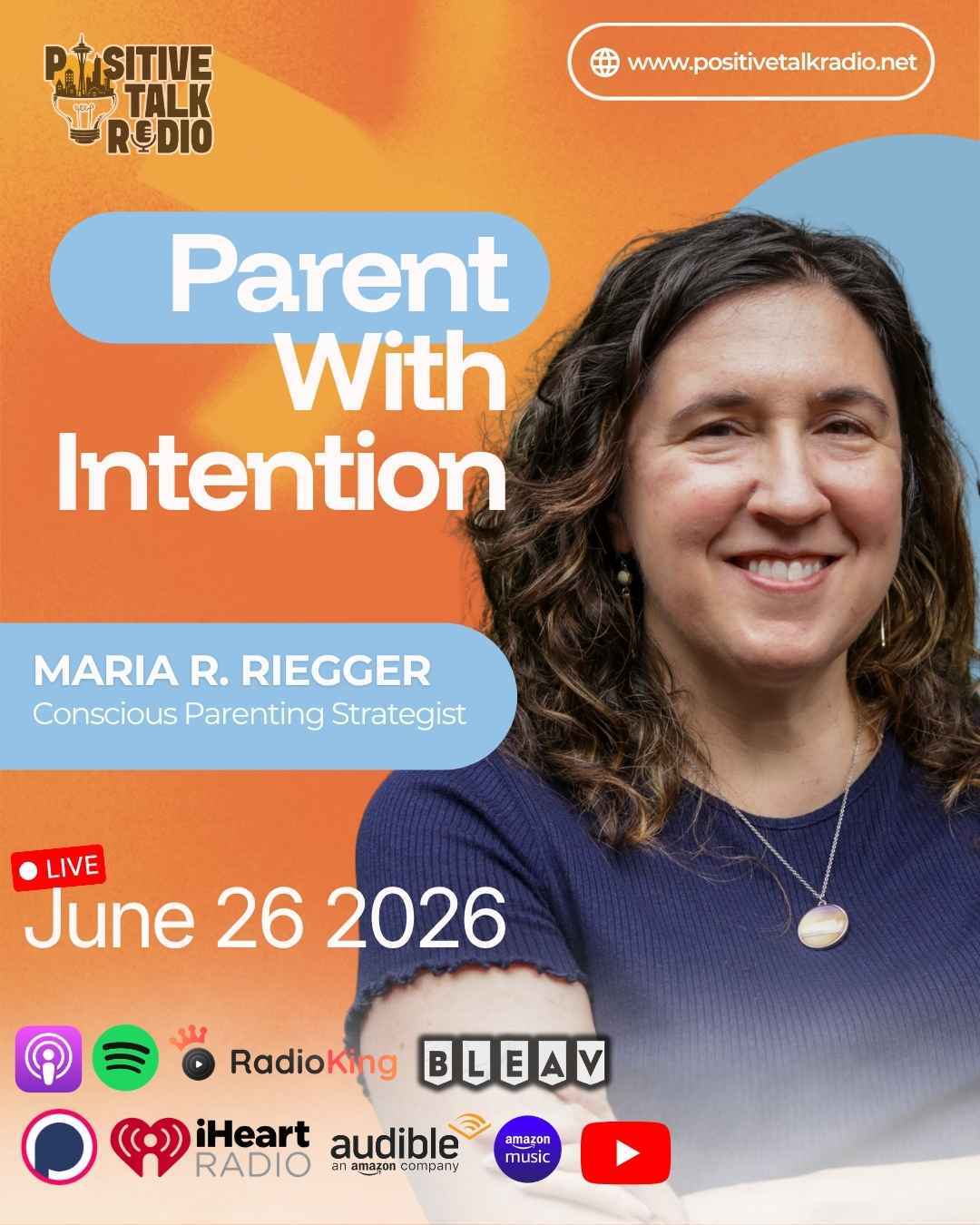
It also became one of the most fascinating parts of my recent interview on Positive Talk Radio, because these findings challenge many of the beliefs our culture holds about “good parenting.”
▶ Watch the interview here: https://www.youtube.com/live/gg3241lqvPQ?si=oeHLeDlw5CcSTjHT
Why This Interview Is Different
Most parenting interviews focus on strategies.
How to discipline children.
How to improve communication.
How to get teenagers to cooperate.
Those conversations are valuable, but they often stay on the surface.
In this interview, we went further.
We explored why children respond the way they do, what decades of parenting research actually tells us, and why parents who invest in their own healing may be giving their children one of the greatest gifts imaginable.
As both an attorney and a certified trauma-informed coach, I’m interested in the intersection between research and lived experience. I don’t believe parents need more guilt or more opinions. They need evidence they can trust, and a framework that helps them apply it in real life.
The Parenting Study That Made Me Stop and Think
For decades, developmental psychologists have described four broad parenting styles:
- Authoritative: High emotional responsiveness with clear expectations and structure.
- Authoritarian: High control with low emotional responsiveness.
- Permissive: High emotional responsiveness with relatively little structure.
- Neglectful: Low responsiveness and low structure.
Research has consistently shown that authoritative parenting is associated with many positive outcomes. Adolescents raised in authoritative homes tend to be less likely to misuse alcohol and drugs, are often less susceptible to unhealthy peer influence, and generally demonstrate stronger long-term adjustment than their peers raised in more authoritarian or neglectful environments.
Those findings make intuitive sense.
Children benefit from both emotional connection and healthy structure.
But then I came across research that challenged my own assumptions.
The Finding I Didn’t Expect
While preparing my TEDx talk, I came across a 2018 study that stopped me in my tracks.
Researchers in Spain studied approximately 1,000 adolescents between the ages of 12 and 17, comparing the four widely recognized parenting styles: authoritative, authoritarian, permissive and neglectful.
Conventional wisdom, and much of the existing research, has long held that authoritative parenting, which combines warmth with clear expectations and structure, produces the healthiest outcomes for children.
The Spanish researchers confirmed many of those positive outcomes. But they also uncovered something unexpected.
Among all four parenting styles, adolescents raised in permissive households reported the highest levels of emotional self-esteem.
That finding surprised me because it challenges a deeply held assumption in parenting: that adding more structure necessarily produces healthier emotional development.
Importantly, the study does not suggest that parents should abandon boundaries or allow children to do whatever they want. Rather, it raises a provocative question:
Could emotional responsiveness be even more influential than we’ve traditionally believed in shaping a child’s sense of self?
An Intriguing Finding Across Two Different Countries
What makes this research even more compelling is that it is not entirely isolated.
A U.S. study conducted during 2020-2021 involving approximately 240 medical students also found a similar pattern. Among female medical students, those who perceived their parents’ parenting style as permissive reported higher levels of self-esteem than their peers raised under other parenting styles.
Of course, these studies measured associations, not cause and effect, and they involved different populations and different cultural contexts. As an attorney, I believe it’s important to be precise about what research can and cannot tell us.
But when independent studies conducted in different countries identify similar relationships, they invite us to ask better questions rather than dismiss unexpected findings.
For me, the question isn’t whether parents should become “permissive.”
It’s why emotional responsiveness appears to have such a profound relationship with healthy self-esteem.
That is exactly what we explore in the Positive Talk Radio interview.
Why These Findings Make Sense Through a Trauma-Informed Lens
This is where my work as a trauma-informed coach intersects with the research.
Children develop emotionally within relationships.
Before they can consistently regulate emotions, tolerate frustration or make thoughtful decisions, they need repeated experiences of emotional safety.
When children experience a parent who is emotionally available, accepting and responsive, they internalize a powerful message:
“Who I am is enough.”
That internal sense of worth becomes the foundation for resilience, healthy boundaries and secure relationships throughout life.
Healthy structure absolutely has a place. Boundaries matter. Expectations matter.
But if emotional safety is the soil in which children grow, then perhaps warmth and connection deserve even more attention than we’ve traditionally given them.
For parents healing from their own childhood experiences, that insight is incredibly hopeful. It means that becoming more emotionally present with your children may matter even more than striving to become the “perfect” parent.
Healing the Parent Changes the Family
One of the themes we discuss throughout the interview is that parenting isn’t simply about changing children’s behavior.
It’s about understanding ourselves.
Parents who heal their own emotional wounds become better able to:
- Respond instead of react.
- Set healthy boundaries without shame or guilt.
- Stay emotionally present during conflict.
- Raise children who develop confidence from connection rather than fear.
That is conscious leadership.
And it begins with the parent.
Why This Conversation Matters
Today’s parents are surrounded by advice.
Social media offers thousands of opinions every day.
What is often missing is thoughtful conversation grounded in both research and real human experience.
That’s what I strive to bring to every interview, workshop, keynote, and coaching conversation.
I enjoy translating complex psychological research into practical insights that parents, educators, and organizational leaders can immediately apply.
Because when adults become more emotionally regulated leaders, everyone around them benefits, including the next generation.
Looking for a Speaker Who Brings Research to Life?
If you’re planning a conference, leadership event, parenting summit, employee wellness program, school event, or professional association meeting, I’d love to join the conversation.
My presentations combine:
- Current research on parenting, attachment, and emotional resilience
- Trauma-informed approaches to conscious leadership
- Practical tools parents can apply immediately
- Insights drawn from my unique background as both an attorney and certified trauma-informed coach
My goal isn’t simply to inspire an audience.
It’s to leave them thinking differently, and equipped to create lasting change in their families and communities.
For speaking engagements, workshops, podcasts, or media interviews, please contact:
Together, we can help parents move beyond behavior management and toward the kind of conscious leadership that builds emotionally healthy, resilient families.