
You can lead a multimillion-dollar project. Negotiate high-stakes contracts. Manage difficult personalities with grace.
So why does one eye roll from your teenager, or one meltdown from your toddler, leave you reacting in ways that don’t reflect the person you know yourself to be?
If you’ve ever found yourself wondering, “Why can I stay calm at work but lose my patience at home?” you’re not alone.
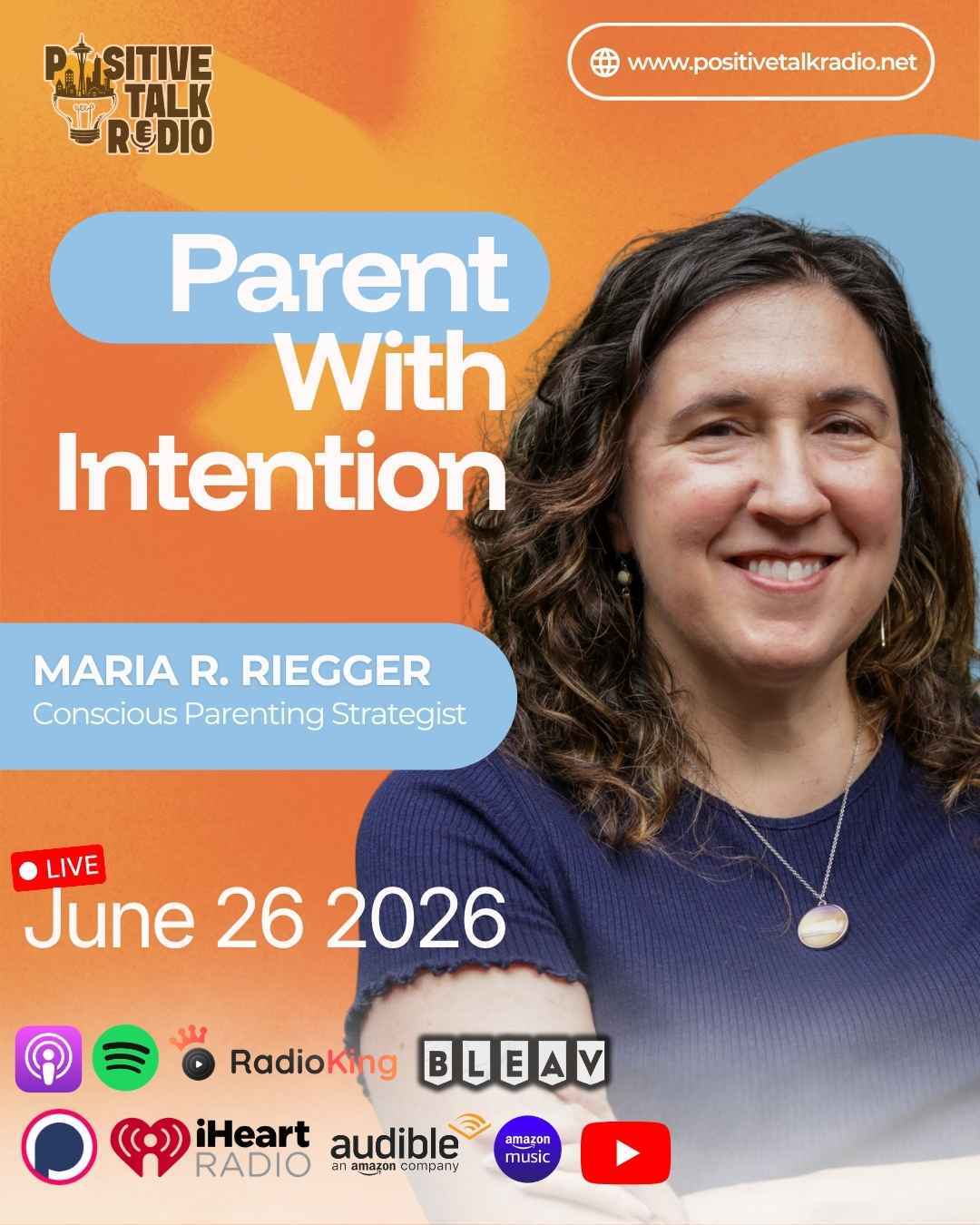
I recently had the opportunity to discuss this very question during a live radio interview on Positive Talk Radio about conscious leadership for parents. One of the biggest takeaways from our conversation was surprisingly simple:
The greatest leadership challenge most professionals will ever face isn’t in the boardroom. It’s in their own home.
If you’d like to watch the interview, you can view it here:
▶ Watch the interview: https://www.youtube.com/live/gg3241lqvPQ?si=oeHLeDlw5CcSTjHT
Why Parenting Feels So Different
Most successful professionals spend years developing leadership skills.
We learn to communicate strategically. Manage conflict. Negotiate. Stay composed under pressure. Think before speaking.
Yet many of those same people come home and discover that none of those skills seem to work with their own children.
The reason isn’t that you’re failing.
It’s that your children are interacting with a completely different part of your nervous system.
Children have an extraordinary ability to activate our oldest emotional patterns. When we feel disrespected, ignored, rejected, overwhelmed, or out of control, our reactions are often shaped less by the present moment than by experiences we never fully processed ourselves.
This is one of the foundational ideas behind conscious parenting: our children don’t simply need us to teach them; they invite us to grow ourselves.
You Don’t Need Better Parenting Scripts
Many parenting books focus on techniques:
- What to say during a tantrum
- How to get children to cooperate
- Better consequences
- Better routines
Those tools certainly have value.
But they often fail when your nervous system is already overwhelmed.
If you’ve ever known exactly what you should say, and still couldn’t say it, that isn’t a knowledge problem.
It’s a regulation problem.
That’s why lasting change begins with the parent, not simply with the child’s behavior.
Perhaps the most liberating realization of all is this: conscious leadership frees you from believing that your job is to manage your children’s emotions, choices or behavior.
Many of us were taught, often without realizing it, that good parenting means producing well-behaved children. We become preoccupied with controlling outcomes, anticipating everyone’s reactions and carrying responsibility for how other people feel. Those are hallmarks of codependent patterns, and they leave parents exhausted, anxious and constantly questioning themselves.
They also teach your children how to be codependent themselves.
Conscious leadership offers a different path.
It asks you to stop leading through control and start leading through example.
Your responsibility is not to control your child. Your responsibility is to lead yourself.
That means regulating your own nervous system, living according to your values, communicating healthy boundaries and allowing your children the dignity of making age-appropriate choices and learning from the natural consequences of those choices.
Paradoxically, when parents stop trying to manage everyone else, they become far more effective leaders. They create a home where connection replaces control, accountability replaces power struggles, and every family member, including the parent, has the freedom to become their authentic self.
That is the heart of conscious leadership: autonomy begins with the leader..
Conscious Leadership Starts With You
At work, leaders understand that culture flows from leadership.
The same is true at home.
Children don’t learn emotional regulation because we tell them to calm down.
They learn it because they repeatedly experience a regulated adult who models calm, accountability, healthy boundaries, and repair.
That doesn’t mean being a perfect parent.
In fact, perfection is the opposite of conscious parenting.
Children don’t need perfect parents.
They need parents who are willing to notice their own reactions, take responsibility for them, repair when necessary, and continue growing.
That kind of leadership creates emotional safety—one of the strongest predictors of resilient relationships.
Why My Background Is Different
People often ask how I ended up combining law, trauma-informed coaching, and parenting.
The answer is that these fields are deeply connected.
As an attorney, I’ve spent years helping clients navigate conflict, boundaries, financial control, coercive relationships, and high-conflict situations.
As a certified trauma-informed Reparenting Coach, I help people understand what happens inside the nervous system during those moments when emotions take over.
Together, those perspectives reveal something powerful:
Many parenting struggles aren’t actually parenting problems.
They’re unresolved survival strategies that once helped us cope, but no longer serve us.
When we heal those patterns, our parenting changes naturally.
We stop parenting from fear.
We stop parenting from guilt.
We stop parenting from people-pleasing.
Instead, we begin leading our families from clarity, presence, and intention.
The Hidden Cost of Unhealed Patterns
Many high-achieving parents assume they’ll eventually “figure it out.”
But emotional patterns rarely disappear on their own.
Instead, they quietly affect:
- Family communication
- Marriage and co-parenting
- Children’s emotional security
- Boundaries
- Confidence
- Stress levels
- Even professional performance
The irony is that many of the qualities that make us successful professionally—perfectionism, hyper-responsibility, constant achievement, always taking care of everyone else—can become liabilities if we never examine where they came from.
Healing isn’t about becoming someone different.
It’s about becoming more fully yourself.
Imagine Leading at Home the Way You Lead at Work
Imagine responding instead of reacting.
Imagine setting boundaries without guilt.
Imagine remaining calm during conflict because your nervous system no longer experiences every disagreement as a threat.
Imagine raising children who don’t just hear your advice, but experience emotional safety because of the way you lead.
Then imagine those children approaching YOU for guidance because they TRUST you.
That is conscious leadership.
And it begins with your own healing.
Ready to Begin?
If this resonates with you, I invite you to watch the full interview, where we explore conscious leadership, emotional regulation, and the inner work that transforms parenting.
▶ Watch the interview: https://www.youtube.com/live/gg3241lqvPQ?si=oeHLeDlw5CcSTjHT
If you’re a high-achieving parent who is successful professionally but wants your home life to reflect the same level of intentional leadership, I’d love to help.
My coaching integrates trauma-informed practices, nervous system regulation, practical boundaries, and decades of experience helping people navigate conflict and difficult life transitions.
The first step isn’t becoming a better parent.
It’s becoming the kind of leader your nervous system allows you to be.
If you’re ready to explore what’s possible, schedule a consultation by clicking here. We’ll talk about where you feel stuck, what patterns keep showing up, and how you can begin creating the peaceful, connected family life you’ve worked so hard to build.